Light, Darkness, and the Unknown
“What can we see during the period of light? The visible, the known? What can we not see when it is dark? The invisible, the unknown? What and when do we see?”
These questions form the foundation of my work. They remind me of William Blake’s enduring words: “…you see with, not through the eye.” Blake’s statement has become a guiding force for me, reshaping how I understand perception—not simply as the act of looking, but as an inward process of imagination and awareness.
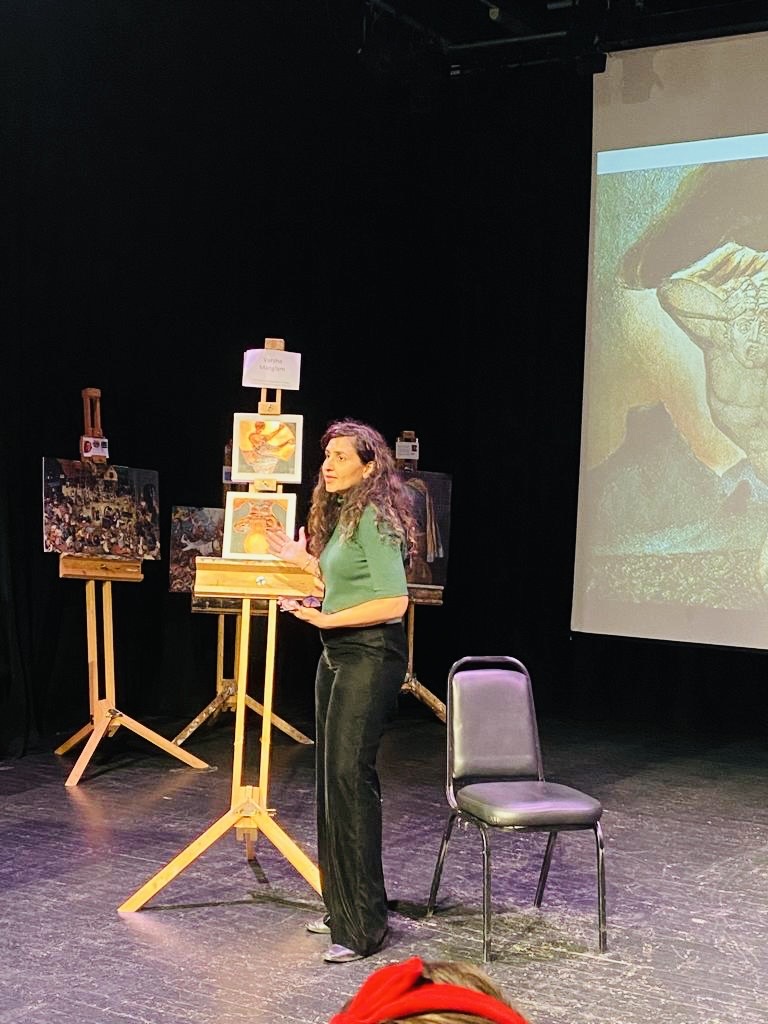
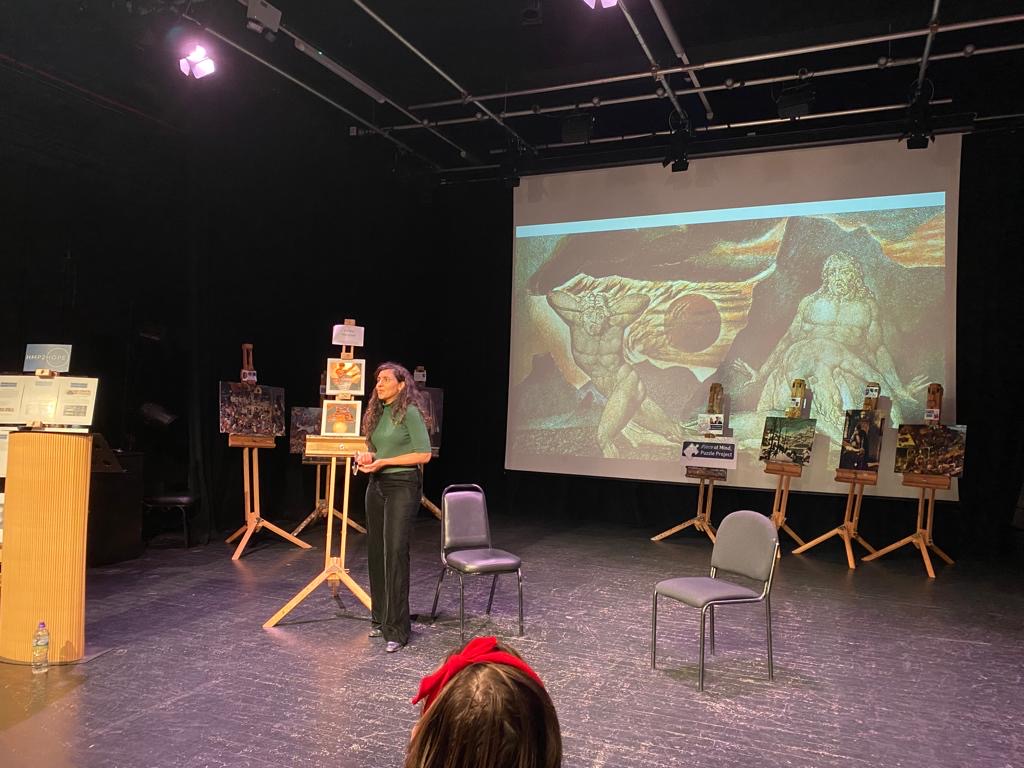
In this symposium conducted in partnership with Tate Liverpool and Hope University, I presented my artwork inspired by work of William Blake. They are a sustained dialogue between darkness and light, each dependent on the other, each giving meaning to the other. Darkness, though often feared or misunderstood, is never final—it gives way to light. And light, when it breaks through, is not passive but strong, vibrant, and opening outward. The interplay between shadow and illumination creates not only contrast, but also a sense of depth, mystery, and perspective. In this tension, the unknown and the visible begin to coexist.
It raises the question: is it possible to see extremes at the same time? To experience both night and day, both shadow and brightness, both the known and the unknown? Through this work, I want to invite the viewer into this question—asking them to notice the narrative unfolding in the space between light and dark, and to consider how these contrasts echo in their own thoughts and perceptions.
Working with the Opposition of Light and Dark
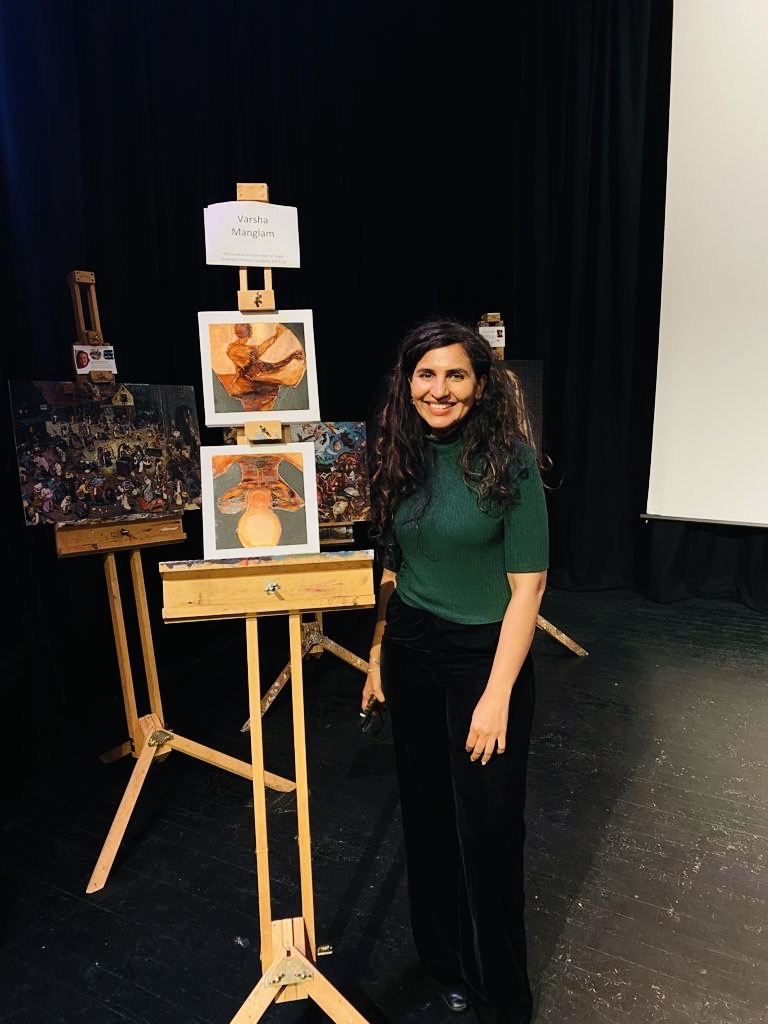
Much of my artistic process during the making of these paintings is intentionally stripped down to its essentials. My paintings are almost devoid of colour, relying instead on the primal opposition between darkness and light. I often use copper-based materials that catch and reflect light, adding a luminous quality to otherwise subdued surfaces. Thin, brown washes form figures against pale grounds, creating forms that feel both anchored and fragile.
The method is consciously retrospective, looking back toward William Blake’s own illuminated books, mirroring the focus of Blake’s illuminated pages, while giving them a contemporary reinterpretation.
The paintings directly reference Blake’s imagery, particularly from Jerusalem (plate 41), Milton (plate 21), the frontispiece for Ahania, and plates 10 and 17 from Urizen. By translating these figural motifs into my own pictorial idiom, I honour Blake while simultaneously creating a new visual language that speaks to the present.
Black, White, and the Nature of Perception
Colour theory also plays an important role in my thinking. Black is traditionally understood as the absence of colour and light, created when all hues are absorbed. This is the principle behind subtractive colour mixing, familiar to painters and printers: when pigments are layered in equal measure, they create black.
White, however, is more paradoxical. In the visible spectrum, white light is the combination of all colours, yet in painting it cannot be “mixed” from other pigments. It must be present from the start, through materials such as limestone or other white grounds. On digital screens, by contrast, white is achieved through the additive blending of red, green, and blue light.
For me, this paradox—black as absence, white as culmination—mirrors the duality of perception itself. What we see depends as much on what is concealed as on what is revealed. The dialogue between these poles is what drives my work.
Blake’s Enduring Influence
Blake’s influence on my practice is not limited to imagery alone. His philosophy of vision and imagination informs the very structure of my work. My drawings, though simplified and linear, carry a symbolic energy that echoes Blake’s expressive use of the human form. By translating bodily movement into line and form, I attempt to retain the intensity of his symbolic language while framing it within a more austere, abstract approach.
This balance—between homage and reinterpretation—allows me to both honour Blake and open his imagery to new readings. I hope that my work invites viewers to see what I have seen in Blake’s illuminated relief etchings, while also discovering their own perspectives. Rather than merely presenting images, I aim to create a space of encounter, where the viewer is encouraged to pause, reflect, and imagine.
Conclusion
At its heart, through this project, I explored the thresholds of vision: what is seen, what is unseen, and how light and darkness define one another. By reducing colour, emphasizing contrasts, and drawing upon Blake’s visionary imagery, I strive to create works that feel at once timeless and contemporary.
Ultimately, these pieces are not only an homage to Blake but also an invitation—for each viewer to step into the dialogue between darkness and light, to consider the visible and the invisible, and to discover how perception itself shapes meaning.