
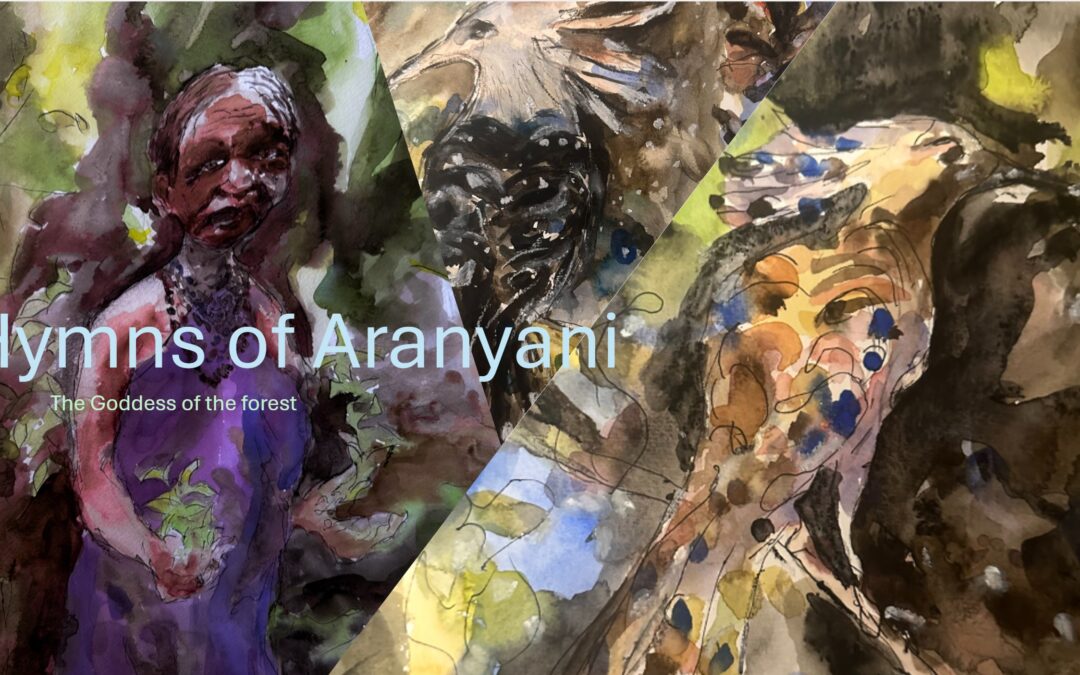
She hears the cries of the forest
With each step she took, the earth did heal...
Hymns of Aranyani began in a space between mythology and ecological grief, between ancient texts and contemporary concerns, and between the human and the more-than-human world.
This 15-minute video installation created in 2024, was inspired by the 63 verses of the Prithvi Sukta from the Atharva Veda, alongside philosopher Rosi Braidotti’s discussions surrounding posthuman critical thinking and its implications for our understanding of the self, society, and the environment.
Within Vedic philosophy, Earth is not understood as a passive resource but as a living force embodying the feminine principle,a source of nourishment and sustenance. Yet she can also become fierce and devastating through earthquakes, floods, and wildfires when ecological balance is disrupted. This duality reminds us that humanity does not exist outside nature; rather, we remain deeply entangled within it.
As environmental crises continue to intensify, I became interested in exploring whether storytelling could create spaces for reimagining this relationship. I wanted to move beyond explanation and toward storytelling, using mythology, poetry, and speculative imagination as ways of thinking with the more-than-human world.
This led to Hymns of Aranyani.
Inspired by Aranyani, the Goddess of the Forest in Indian mythology, the installation unfolds through a non-linear form of storytelling. Traditionally, Aranyani inhabits spaces beyond human control,wild landscapes that resist ownership and extraction. In this work, she becomes more than a mythological figure; she emerges as a witness, storyteller, and reminder of forgotten relationships between humans and the natural world.
Unlike linear narratives that privilege human experience alone, the work embraces a posthuman perspective in which forests, winds, seeds, birds, and non-human beings become active participants within the story.
Writing and narrating the hymns myself introduced a deeply personal dimension into my creative practice. Through narration, I moved beyond image-making and entered storytelling as an expanded artistic form. The process allowed me to think not only through visual language but through voice, rhythm, and oral storytelling traditions. This shift opened a new way of working—one where storytelling itself became a method for thinking through ecological questions.
The narrative opens with Aranyani:
In the heart of the forest, where the trees stretch high,
Where wildflowers bloom with graceful ease,
The forest goddess Aranyani reigns...
She emerges as a nurturing force whose roots delve deep into the earth and whose presence sustains all life around her.
As the story unfolds, figures such as Kali appear not only as symbols of destruction but also as forces of transformation and healing:
She hears the cries of the forest
With each step she took, the earth did heal...
Another recurring figure is the lone bird—a witness and messenger navigating a world where forests are often approached through extraction rather than care. The bird receives a seed from the Goddess and a responsibility:
A seed I'll give you,
And a whole forest will emerge out of it.
The seed becomes symbolic of memory, possibility, and ecological responsibility.
The characters inhabiting these hymns were inspired by real women whose care and labour transformed landscapes. Figures such as Timakka, Ranibai, and Tulsi draw from real life stories of environmental stewardship and resistance. Their presence grounds mythology within lived realities and reminds us that care for the earth often emerges through quiet and persistent acts.
The installation concludes with The Forest Fable:
Stones were hurled at trees
Which bore fruits
Then the same tired souls
Slept under its shade...
The trees continue to love despite violence. Their endurance raises difficult questions about ecological indifference while also suggesting possibilities for repair and reciprocity.
Hymns of Aranyani formed one part of my broader solo exhibition The Earth Breathes (2024), which explored themes surrounding ecology, interconnectedness, and our relationship with the more-than-human world. Situated within this larger body of work, the video installation expanded these concerns through mythology, speculative storytelling, and posthuman perspectives.
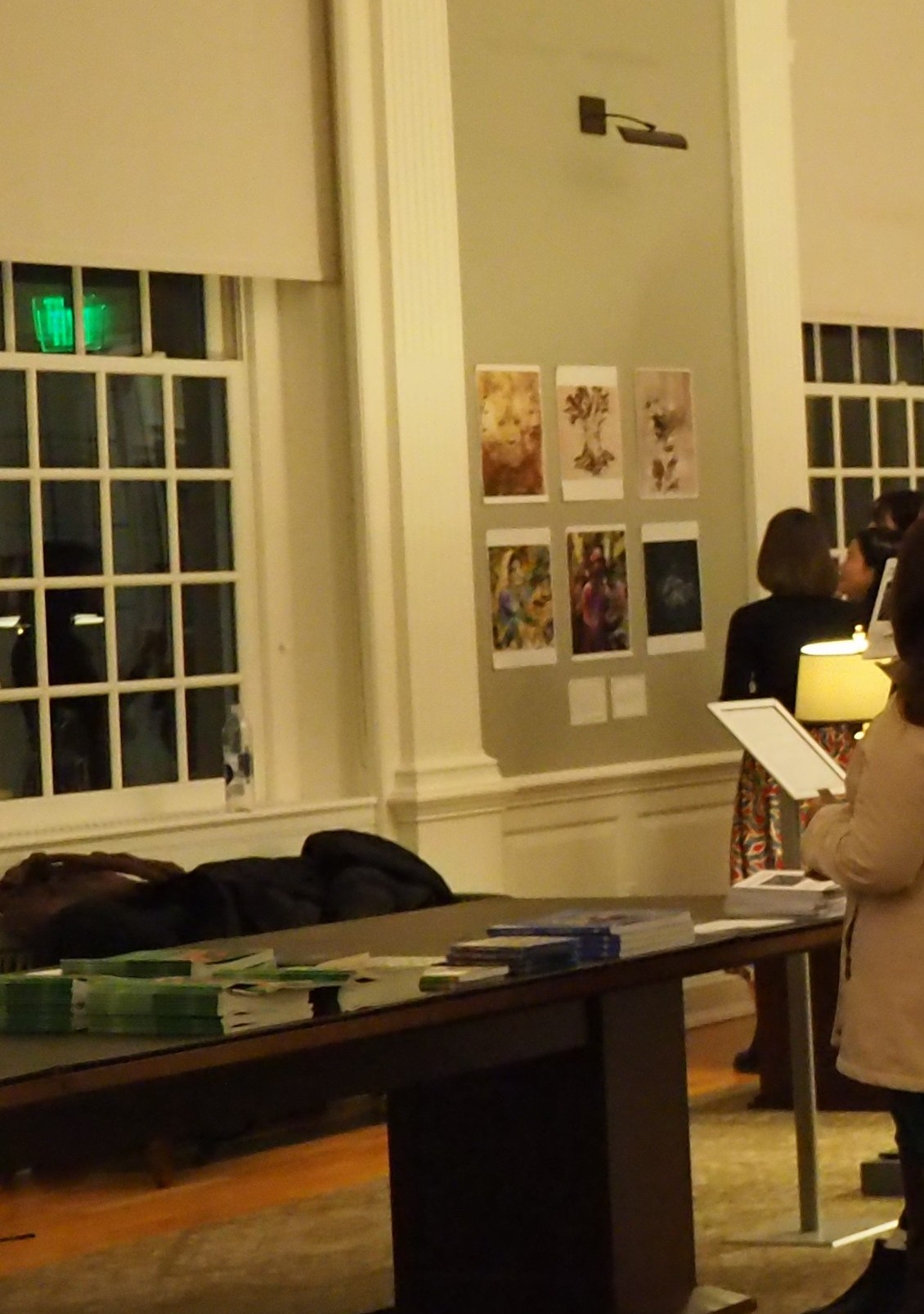
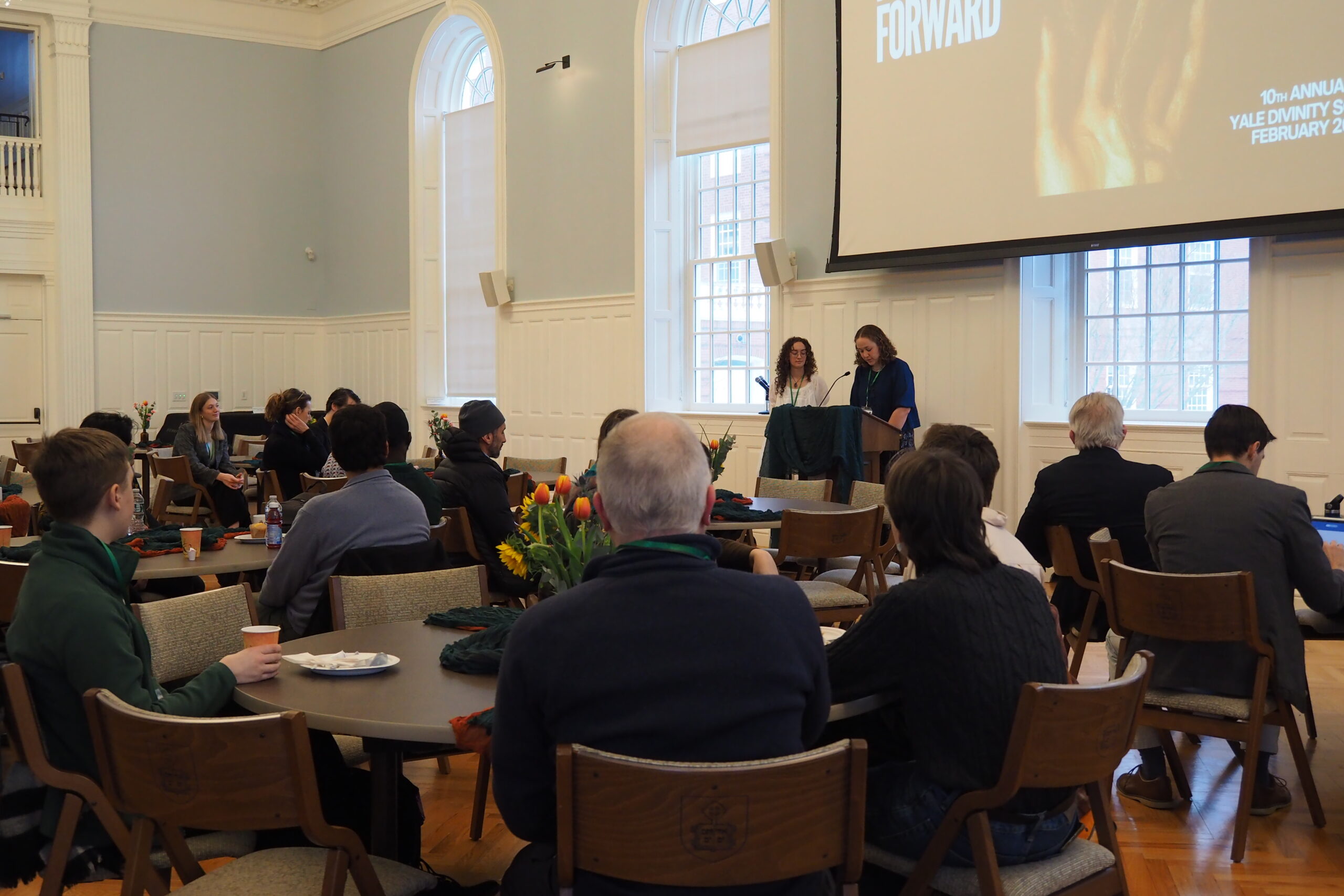
As the project continued evolving, it moved through different contexts and audiences. An important chapter in its journey unfolded through its presentation at a conference at Yale University in 2024, where the work was presented through the video installation alongside selected prints from the project.
Experiencing the work within a conference setting transformed its context in unexpected ways. Surrounded by artists, scholars, researchers, and participants from different disciplines, the installation entered wider conversations around ecology, spirituality, storytelling, and environmental futures.
Rather than existing as a finished piece, the work became part of an ongoing exchange. Witnessing audiences engage with the installation reinforced my belief that stories can move across places and contexts, opening new spaces for reflection and connection.
Hymns written and narrated by: Varsha Manglam
Audio-video production: Jacob Coombes
Artwork: Varsha Manglam
Hymns Inspired by:
Collection of Ten Thousand Leaves – Japanese poetry anthology
Earl Roy – Praising Yoshino in Spring
Edward Thomas – Thaw
Sara Teasdale – There Will Come Soft Rains
Shetlesh Thul – Pedh (Tree)
O.T. Dwivedi & Christopher Key Chapple – In Praise of the Mother Earth: The Prithvi Sukta of the Atharva Veda