
A Line is Not Just a Line .It is movement made visible.
Every artist develops their own visual language through marks and lines. Before shape, color, or composition, there is simply movement across a surface. The way we make marks is deeply personal , almost like visual handwriting. Some lines feel controlled, others are instinctive, hesitant, energetic, soft, or restless.
In abstract art, these marks become the emotional structure of the work. They create movement, tension, rhythm, and atmosphere, allowing the painting to communicate beyond representation.
Do your lines feel expressive or controlled? What happens when you allow the hand to move more freely?
Unexpected marks often bring life to a composition. A single expressive line can completely change the mood of a piece. There are artists who dedicate their entire practice to the exploration of the line.
Lines are a fundamental part of Amy Sillman’s practice.
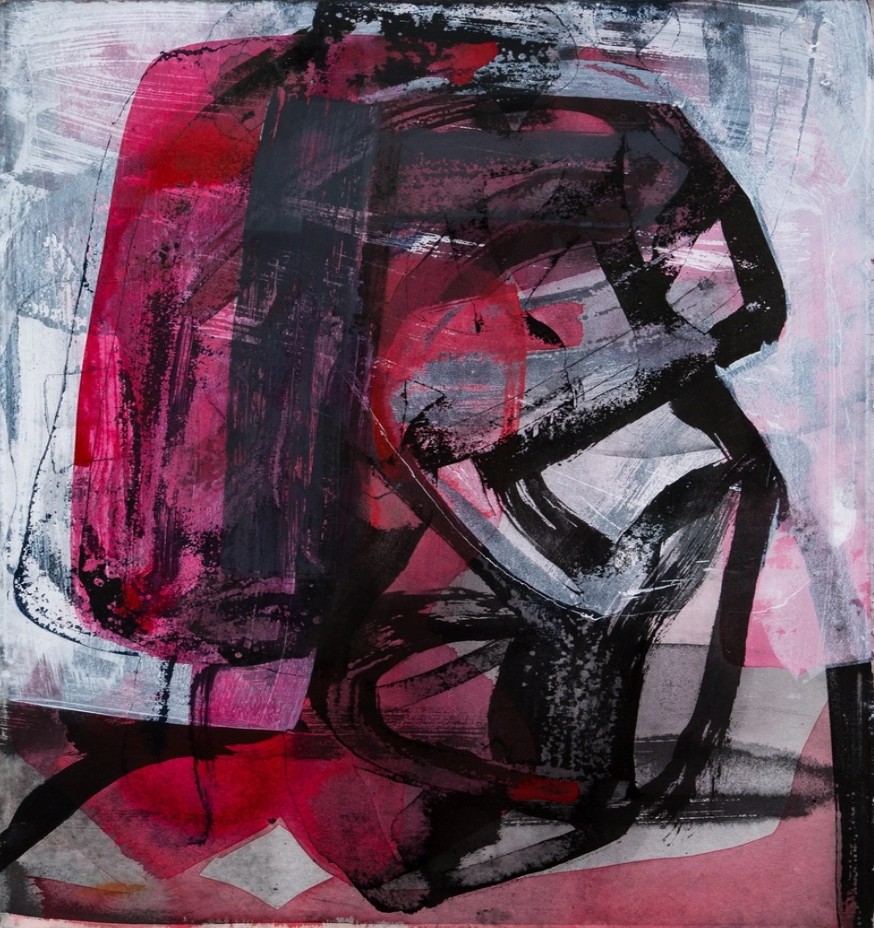
Amy Sillman ,Pink Drawing #36, 2015charcoal, gouache, ink on paper,
Although she is widely known as a painter, Sillman often describes herself as someone who begins through drawing and mark making. Her process starts with the hand moving across an empty sheet of paper, allowing lines and gestures to emerge instinctively rather than constructing an image through careful planning.
This gives her work a sense of movement, spontaneity, and discovery, where the process of drawing remains visible within the final piece.
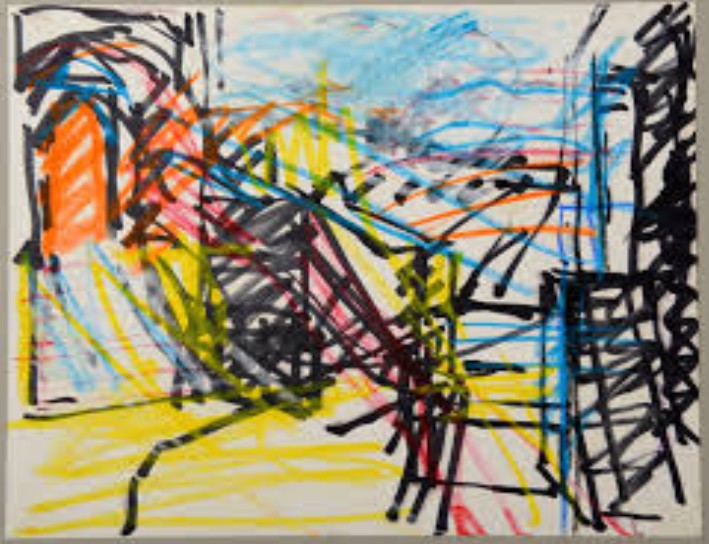
Frank Auerbach - To the Studios, Felt-tip pen and pastel on paper
The landscape drawings of Frank Auerbach are built through repeated energetic marks and layered lines. Rather than describing the landscape realistically, the lines create movement, structure, and intensity. His marks feel searching and instinctive, giving the drawings a strong sense of atmosphere and emotion.
Do your lines describe a place, or do they describe the feeling of being there?
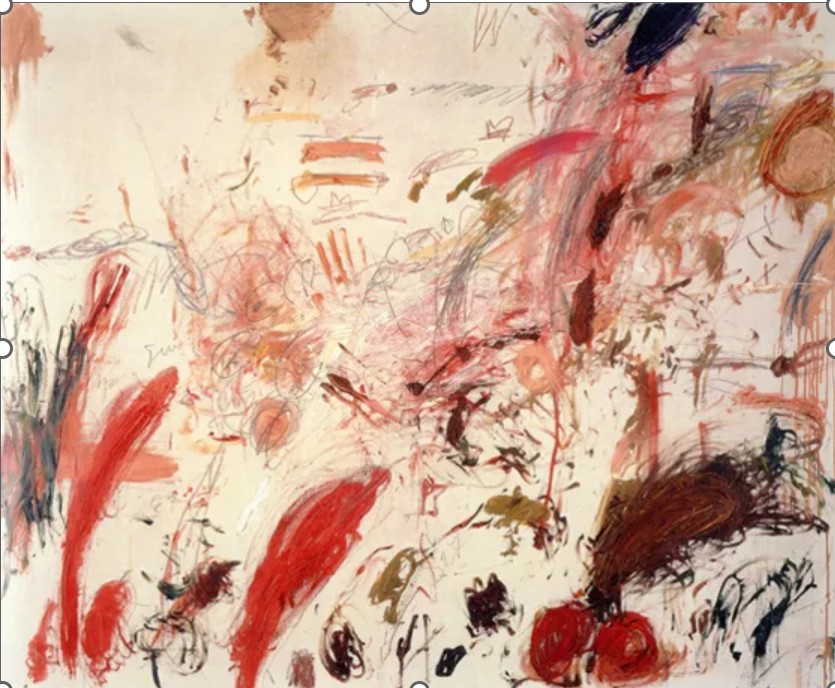
Cy Twombly, Ferragosto (1961).Oil paint, wax crayon, and lead (graphite) pencil
Cy Twombly often spoke about line and mark making as an experience rather than an illustration. He described each line as “the actual experience” of making it, suggesting that the energy and movement of the mark were more important than representation.
His expressive scribbles and layered lines feel spontaneous and physical, almost as though the drawing is recording a moment of thought or movement in real time.
Years later, he reflected on this process again, saying, “It’s more like I’m having an experience than making a picture.” Perhaps drawing is simply a way of making thought visible through movement.
As Henri Matisse beautifully described:
“Drawing is like making an expressive gesture with the advantage of permanence.”