
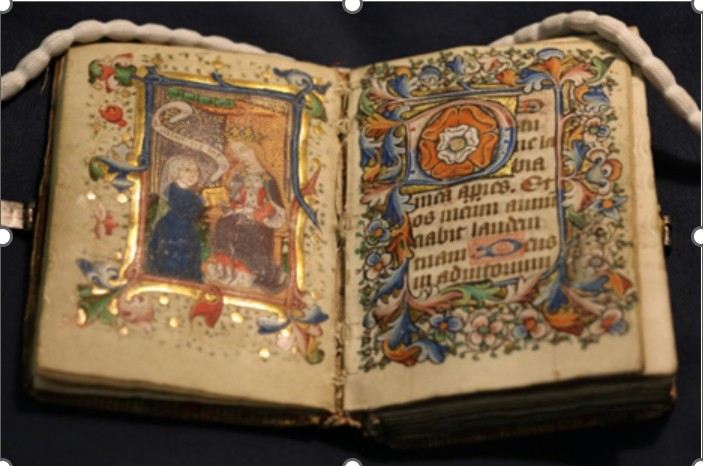
Among the manuscripts I encountered, I found the Book of Hours especially beautiful and fascinating.
The Book of Hours, a prayer book for everyday use, was often decorated with illustrations and borders painted with expensive pigments that were difficult to obtain at the time, together with gold added to the illustrations and colours. For this reason, the Book of Hours usually contained only a few illustrations. Yet these illustrations, colours and the skill with which they were made transform the book into an object that tells a story.
The virtual visit to the library and the pre-recorded videos on the Book of Hours and the handling of rare books and manuscripts were very informative.
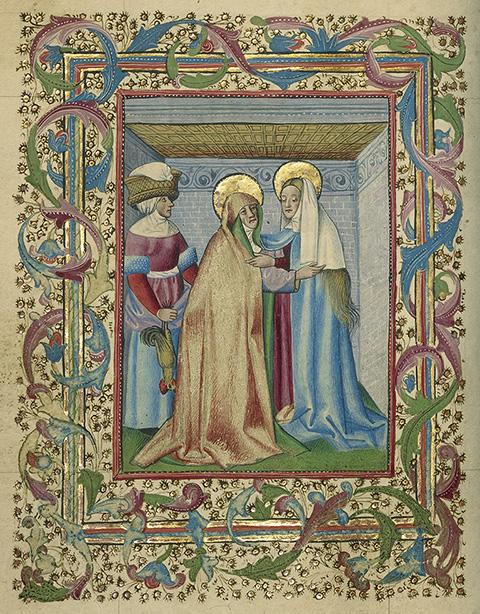
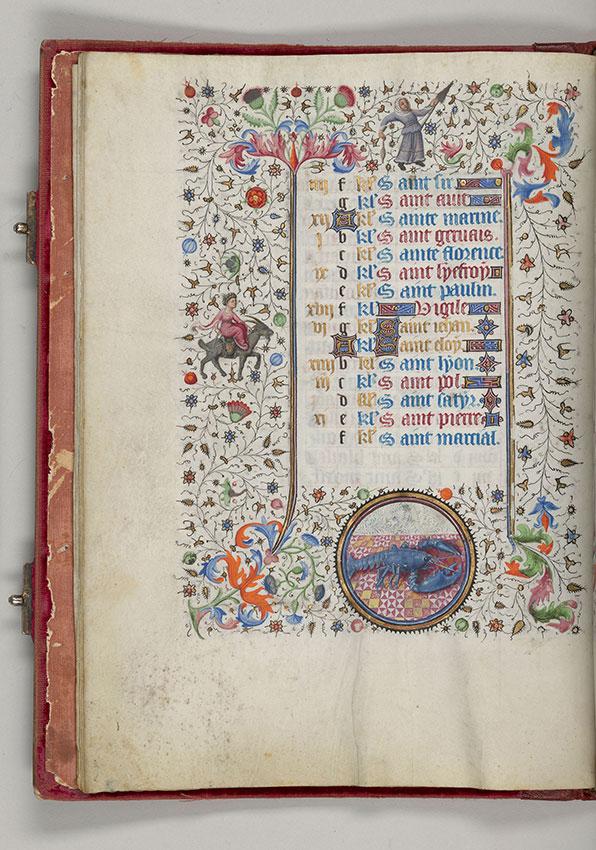
In manuscript MS5, the illustrations include a landscape in the background and figures in the foreground, although the figures are not executed particularly well. The border design has an oriental character and is highly detailed, though it is not drawn very finely and appears scattered in places. There is also a floral border surrounding the text area.
This book appears to belong to eighteenth-century Paris and has a leather binding.
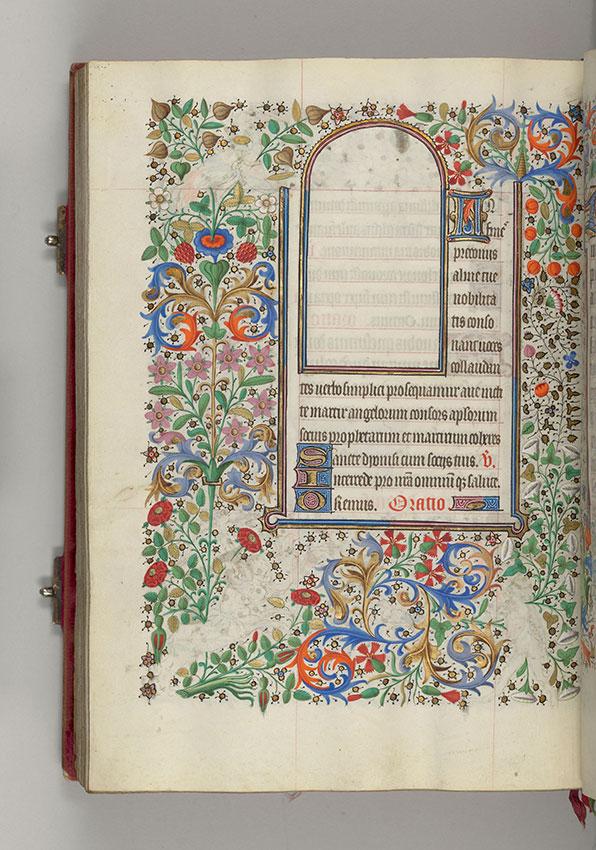
The MS6 book seems to have better quality colours, as they appear brighter and more vibrant, suggesting that it has been preserved well. It also has much more elaborate borders, fuller and more attractive in design. The floral patterns are beautiful, with a much greater use of gold than in MS5.
The illustrations mainly consist of figures, which are painted more skilfully than those in MS5. Unlike MS5, there is no themed background, and the focus remains entirely on the figures. The text area is surrounded by colourful and delicate oriental designs.
There is also some English text in the manuscript, which suggests that it may be a fourteenth-century prayer book for an English queen. The greater use of gold in the illustrations and borders gives the book a particularly rich appearance.
Other books and written objects provide an interesting comparison.
The Hebrew Scroll of the Law contains only plain black text. The Christian Breviary has a similar use of coloured text, though it is also mainly black. Small decorative designs appear beside the text, but there are no illustrations.
In comparison with these two religious texts, the Qur’an contains full pages of illuminated decoration, with a great deal of gold and intricate oriental patterns. The colours are bright, which suggests that high-quality pigments were used. The designs and patterns are even more delicate than those seen in the Book of Hours.
There are fewer illustrations, perhaps because of the cost of gold and the pigments. The text in the Qur’an is mainly black, with some red text and a line border.
In the Qur’an, which is a religious text, images of living beings, whether human or animal, are traditionally forbidden. This may be because of the emphasis on the unity and singularity of God, and the prohibition against idol worship. As a result, most of the decorative art in the Qur’an is non-representational.
References
- Aitambov, I. “Why are there no images of Allah?” The Metropolitan Museum of Art.
- Pre-recorded video on the Book of Hours and the handling of rare books and manuscripts.
- Library visit
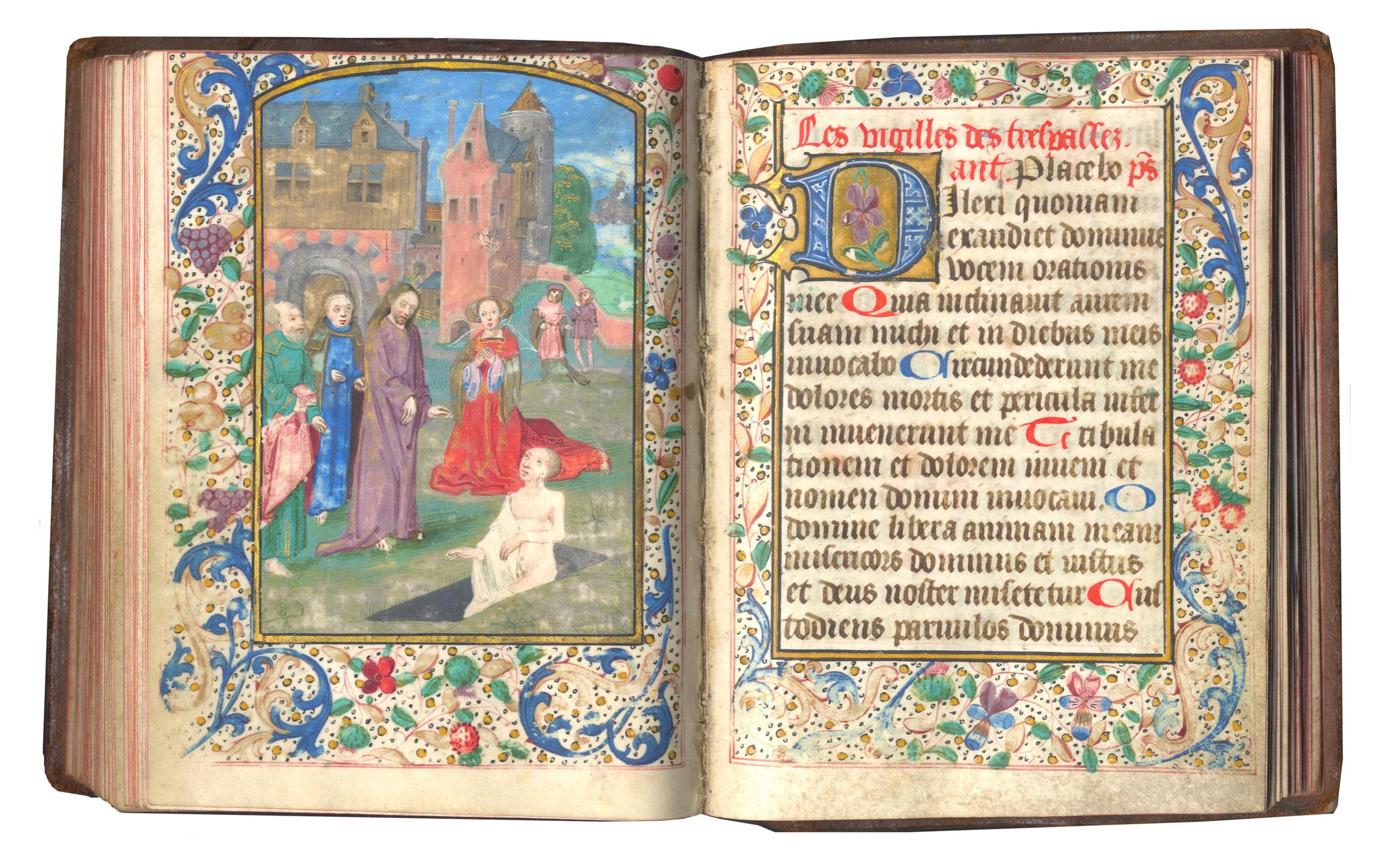
MS5: a landscape in the background, figures in the foreground, and a detailed but uneven decorative border.
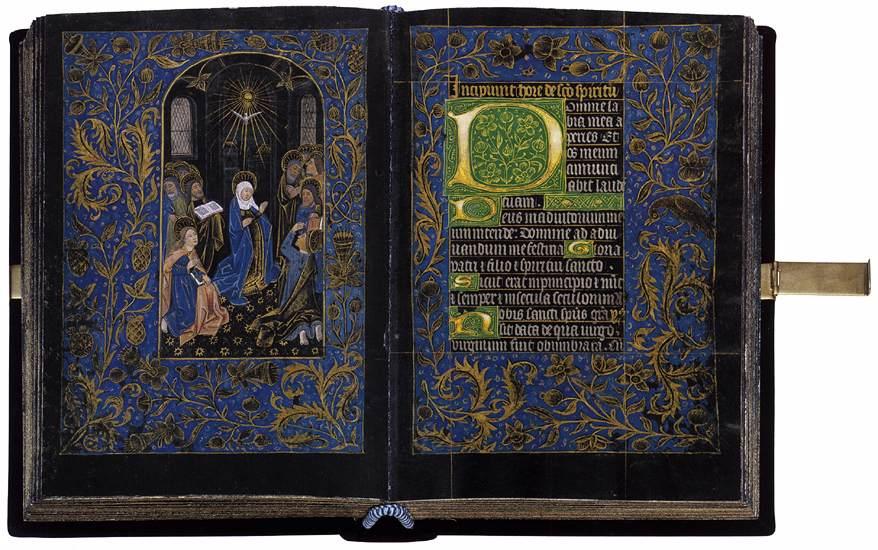
MS6: brighter colours, more extensive use of gold, and fuller floral decoration surrounding the text.
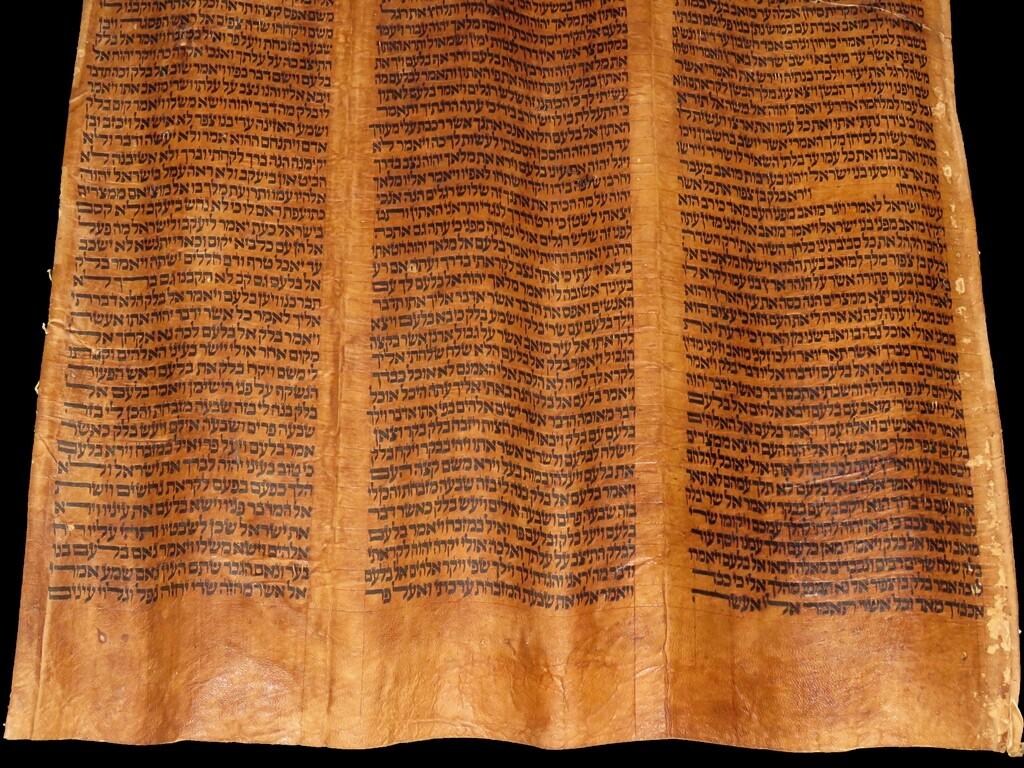
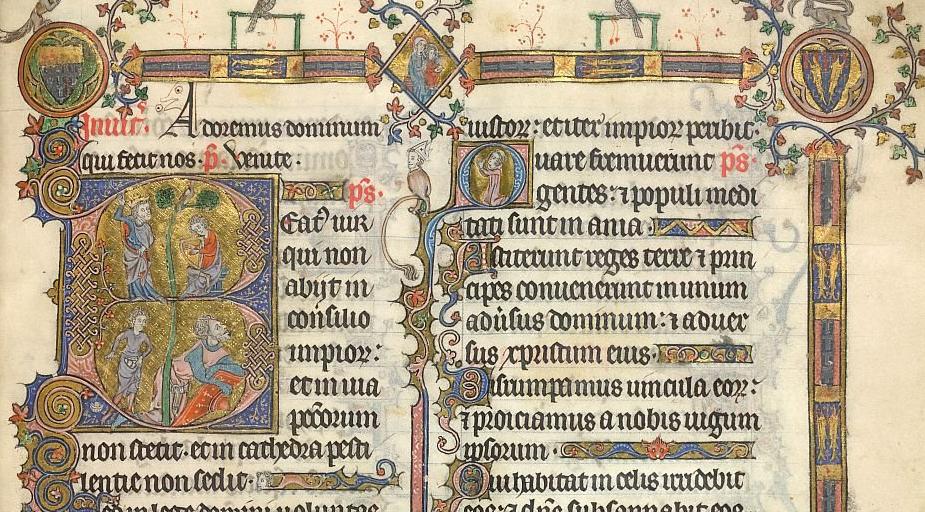
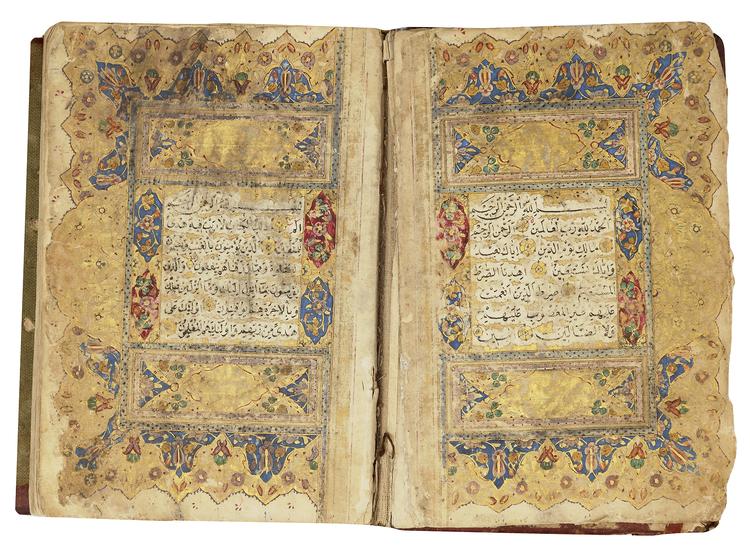
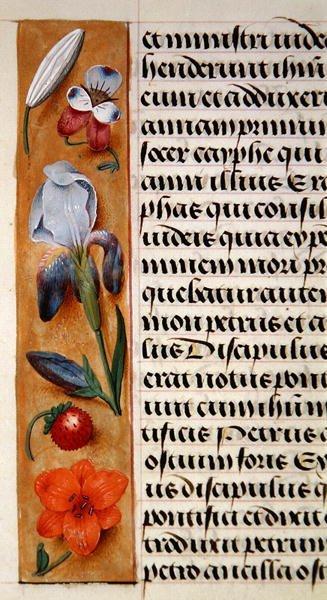
From left to right: the Hebrew Scroll of the Law, the Christian Breviary, and the Qur’an, showing different approaches to decoration and the use of text, colour and gold.