
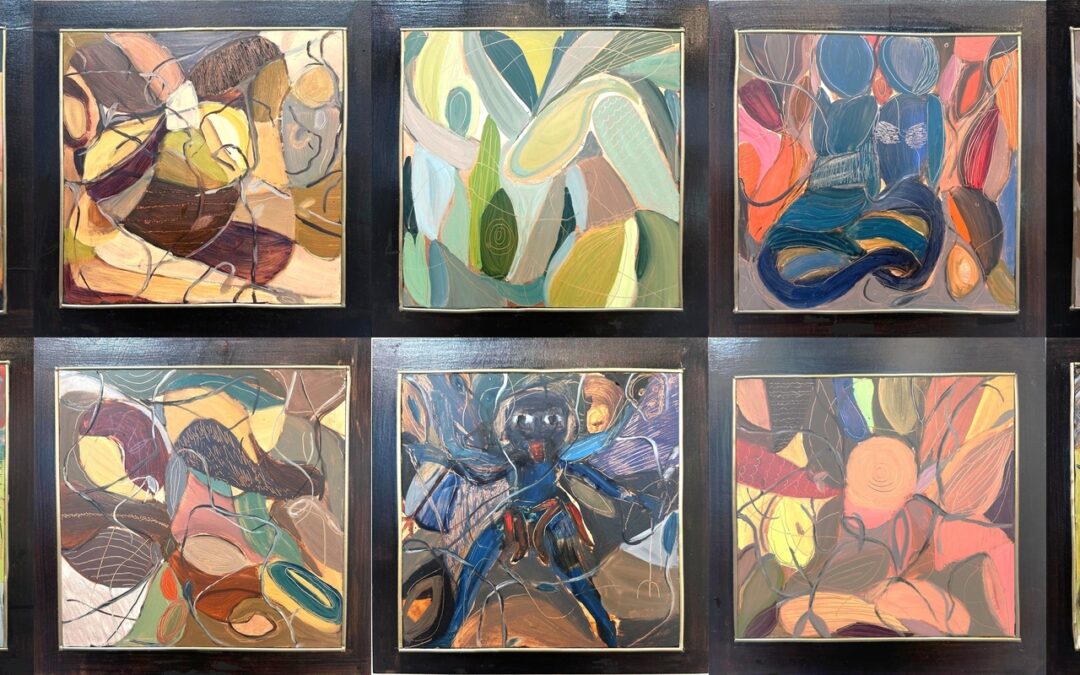
Above - Oil paintings on copper plates by Varsha Manglam , 2024
I created a series of small paintings titled Bramhasutras, inspired by stories and scenes drawn from the rich mythology of the Vedas. The Brahma Sutras are a collection of concise aphorisms that summarize key philosophical and spiritual ideas discussed in the Vedas (Shivanand, S., 2009). The Vedas are abundant with stories, symbolism, and layered meanings, where each element often represents a deeper truth or universal principle. Through these mythical narratives, I seek to foster a sense of wonder, introspection, and connection with the viewer.
As these paintings are rooted in ancient Vedic texts and traditions, I wanted the series to evoke a sense of antiquity, richness, and timelessness. To achieve this effect, copper plate became an appropriate medium. The reflective quality of copper introduced a subtle luminosity and depth, enhancing the visual richness of the paintings. Oil paint, with its vibrant and fresh appearance on copper, further elevated the expressive quality of the work.
Creating on copper required experimentation and technical research. I explored various methods for preparing copper surfaces for oil painting. To make the metal surface workable, I carefully sanded each copper plate using soft sandpaper, creating enough tooth for the oil paint to adhere effectively. This preparation process allowed the medium and surface to work in harmony while preserving the reflective character of the copper beneath.
As the series unfolded, each painting became a visual retelling of myths and symbols that have existed across centuries. Rather than attempting to recreate these narratives literally, I approached them through abstraction, using forms, color, and symbolism to interpret their emotional and philosophical essence.
Plate 1 (2nd row) portrays the story of the Earth Goddess, inspired by the myth in which the demon Hiranyaksha drags the Earth beneath the cosmic waters. Beyond its mythological narrative, the story speaks of imbalance and restoration—of moments when harmony is disrupted and must eventually be recovered. The Earth Goddess becomes a symbol of both fragility and resilience, reflecting humanity’s relationship with nature and the constant struggle to preserve balance and harmony.
Plate 3 (2nd row) depicts Goddess Kali, one of the most powerful embodiments of divine feminine energy. Though often associated with destruction, Kali represents much more than fear or death. She symbolizes transformation—the destruction of illusion, ego, and negativity that obstruct spiritual growth. Through this work, I wanted Kali to exist simultaneously as a fierce force and a figure of liberation, reminding us that destruction often becomes the necessary beginning of renewal.
Plate 4 (1st row) presents Shiva and Shakti as two serpents coiled together. Their union symbolizes the merging of masculine and feminine energies, where Shiva represents stillness and consciousness while Shakti embodies movement and creation. Their intertwined forms become a metaphor for the interconnectedness of existence and the inseparable forces that sustain the universe. The coiled serpents further suggest cycles of transformation and the flow of energy that binds all forms of life together.
Plate 4 (2nd row) portrays Aranyani, the Goddess of forests, who embodies the untamed spirit and abundance of the natural world. Described in Vedic literature as a mysterious presence wandering freely through the wilderness, Aranyani represents both beauty and unpredictability. Through this work, I imagined the forest as a sacred space containing both stillness and hidden life, where mystery itself becomes a source of meaning.
Plate 5 (1st row) illustrates Garuda, the mythical being depicted as both human and bird. Garuda symbolizes strength, protection, and transcendence. As the divine vehicle of Vishnu, Garuda possesses the ability to move freely between realms, making him a symbol of liberation and spiritual ascent. Through this painting, Garuda became a metaphor for freedom and the aspiration to rise beyond limitations.
Plate 5 (2nd row) narrates the story of Shumbha and Nishumbha, whose significance extends beyond mythology into human psychology. Shumbha represents ego, while Nishumbha signifies attachment. Their inseparable relationship reflects the internal struggles that often govern human behavior and prevent self-awareness. Their defeat becomes symbolic of overcoming the forces within ourselves that obstruct growth and self-realization, turning mythology into a reflection of inner experience.
Plate 1 (1st row) portrays the contrasting relationship between Goddess Lakshmi and Alakshmi. Lakshmi symbolizes prosperity, harmony, positivity, and all that sustains life, while Alakshmi represents misfortune and negativity (Pattanaik, D., 2003). According to mythology, Alakshmi thrives in spaces marked by envy, greed, anger, sloth, and disorder. Their coexistence reflects the dualities present within human existence, suggesting that abundance and adversity are not separate forces but interconnected aspects of life itself.
Rest of the plates depict imagined forest scenes inspired by the significance of wilderness in Vedic thought. Forests within ancient texts are not merely physical landscapes, but sacred spaces of retreat, contemplation, and transformation. They are places where sages seek wisdom and where human and divine realms often intersect. Through abstraction, these works attempt to capture not literal spaces but emotional impressions—moments of mystery, silence, movement, and spiritual presence within nature.
Through Bramhasutras, I explore mythology not merely as narrative but as a visual language through which timeless ideas, human emotions, and spiritual truths can be reinterpreted. The series becomes an attempt to bridge ancient wisdom with contemporary visual expression, inviting viewers to reflect on stories that continue to resonate across time.